
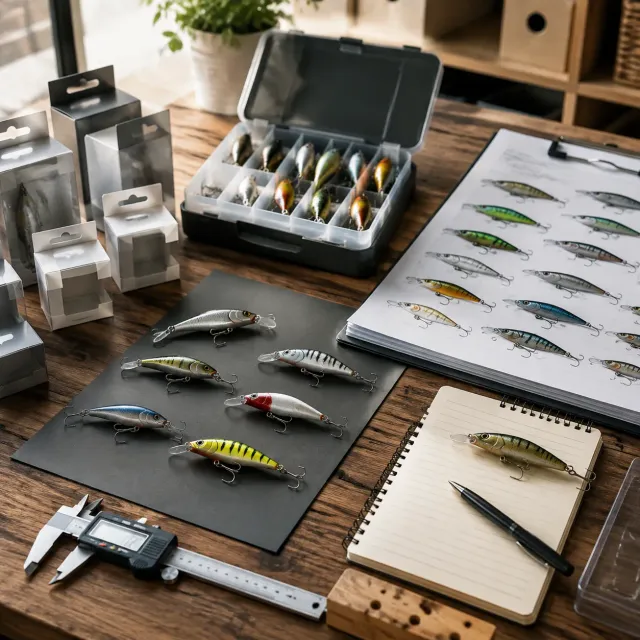
A fishing lure sourcing checklist turns a broad buying decision into a repeatable review of performance, durability, presentation, and commercial risk. Start with the fishery and customer you serve, then document the lure specification, inspect representative samples, and define what must be correct before production or shipment.
For retailers and distributors, the goal is not simply to find a lure that looks good in a catalog. It is to build an assortment whose sizes, actions, terminal hardware, packaging, and product information make sense for the intended angler and selling channel. Use the checklist below before placing a new order or adding a new supplier.
Write a Clear Lure Specification
A clear specification prevents the most common sourcing problem: a buyer and supplier using the same product name while expecting different results. “Minnow plug,” “metal jig,” or “soft plastic swimbait” is a category, not a complete specification.
Create one specification sheet for each SKU or tightly related size family. Include a labeled image or drawing when possible, especially where color placement, hook arrangement, or packaging matters.
Your specification should cover:
- Product type and intended use, such as casting jig, vertical jig, topwater plug, paddle-tail swimbait, or finesse worm
- Target species and fishing environment, including freshwater, inshore saltwater, offshore, current, depth, and cover
- Finished length and weight, with the unit stated consistently
- Body profile and material
- Desired lure action, retrieve speed range, and intended presentation
- Color name, color reference image, and required visual details such as scale pattern, glow area, eye color, or contrast point
- Hook type, size, point style, finish, and number of hooks
- Split rings, swivels, wire forms, blades, skirts, rattles, or other hardware
- Packaging format, package quantity, barcode requirements, and shelf-facing information
- SKU, UPC or internal item number, carton packing expectations, and labeling requirements
For a retailer, the specification should also state what the shopper needs to understand at a glance. A soft plastic may need its length, count, and recommended rigging clearly visible. A metal jig may need its weight, hook configuration, and intended depth or technique stated accurately. Avoid claims such as “saltwater-proof” or “unbreakable” unless the actual product evidence and product page support them.
Use the same controlled terminology throughout your purchase order, sample approval record, packaging artwork, and product listing. Small wording differences can create incorrect listings, mismatched packaging, or a lure that is difficult to reorder accurately.
Confirm Materials and Lure Action
Materials affect more than appearance. They influence sink rate, buoyancy, flexibility, finish durability, hook corrosion resistance, and how consistently a lure performs. Confirm the materials used rather than assuming two visually similar lures are interchangeable.
For hard baits, ask what body material, lip material, wire-through construction if applicable, internal weighting, finish process, and eye attachment are specified. A billed crankbait, for example, should be evaluated for its running depth and stability with the intended line and retrieve, not only for paint quality.
For soft plastics, clarify the plastic formulation, softness, scent or salt additives if present, color dispersion, and whether the package is intended to preserve the lure shape. Material details matter because anglers may judge a soft bait by movement at slow speed, durability around a hook, and whether multiple baits stay straight in the package.
For metal lures, define the alloy or base material where relevant, overall thickness or profile, finish type, assist hook or treble hook setup, and the expected fall behavior. A long, narrow jig and a short, wide jig can weigh the same but fish very differently.
Match action to the actual use case
Lure action should be described in practical, observable terms. “Good action” is not enough. State whether the lure should wobble, roll, dart, glide, flutter, kick, walk, or track straight, and identify the conditions under which that behavior matters.
| Lure category | Key action check | Common sourcing mistake |
|---|---|---|
| Crankbait or minnow plug | Tracks true at its intended retrieve range | Approving paint and shape without checking tuning |
| Topwater bait | Walks, pops, or spits predictably on the intended retrieve | Using hook hardware that interferes with movement |
| Soft plastic | Tail or body moves at the expected speed and rigging style | Evaluating loose samples instead of rigged baits |
| Metal jig | Falls, flutters, or darts as intended | Treating equal weight as equal presentation |
| Spinnerbait or bladed lure | Blade starts reliably and tracks correctly | Ignoring wire alignment and blade-to-body contact |
Action also depends on the line, rod, knot, water movement, and retrieve. A representative sample can reveal whether a lure functions as intended, but it cannot guarantee the same performance in every fishing condition. Record the setup used during evaluation so the result has context.
Review Representative Samples
Do not approve a fishing lure based only on rendered artwork, a listing image, or one hand-picked prototype. Representative samples should reflect the actual construction, hardware, finish, package, and colorways you intend to buy.
Ask for enough samples to compare variation. For a multi-color assortment, inspect more than one color because finishes, coatings, and molded details can differ. For a lure offered in multiple weights or sizes, test the smallest and largest versions as well as a middle size when their behavior could change materially.
Review samples in three stages:
- Bench inspection: Check dimensions, finish, seams, molded detail, alignment, hook attachment, packaging fit, and stated weight.
- Rigged inspection: Install or use the hardware as an angler would. Verify that hook eyes, split rings, soft-plastic channels, jig eyes, and attachment points work with common terminal tackle.
- Water evaluation: Observe tracking, sink or float behavior, casting balance, retrieve action, and any interference between hooks and the lure body.
Document the approved sample with dated photos, measurements, and a concise approval note. This creates a usable reference if later shipments differ. Keep an unmodified approved sample where practical, particularly for a lure with a detailed paint pattern, unusual packaging, or a critical action requirement.
A sample is still a sample. It may not reveal carton-level packing issues, broad production variation, or long-term finish wear. That is why sample approval should lead into written inspection criteria rather than replace them.
Check Hooks, Hardware, and Packaging
Hooks and hardware are often where an otherwise appealing lure loses credibility. Anglers notice dull points, inconsistent hook sizes, poorly closed split rings, loose eyes, and components that foul during use. Review these details as functional parts, not accessories.
For hooks, confirm:
- Hook style and intended placement
- Size relative to the lure body and target fish
- Point sharpness and consistency
- Finish appropriate to the intended environment
- Attachment method, including whether hooks are free-swinging or fixed
- Clearance from the body, blade, lip, tail, or other hooks
For metal jigs and some other designs, determine whether assist hooks, trebles, or both are included. For soft plastics, specify whether hooks are included at all. Do not let listing copy imply a ready-to-fish package when the customer must supply additional terminal tackle.
Hardware inspection should include eyelets, wire forms, split rings, snaps, swivels, blades, and weights. Check alignment and movement. A component may look intact on a tabletop yet bind, open, or interfere once pulled through water.
Treat packaging as part of product quality
Packaging protects the lure, conveys essential buying information, and affects store execution. It should be reviewed with the same care as the bait.
For hard baits and jigs, make sure hooks are restrained or positioned so they do not puncture the package, tangle with adjacent items, or obscure key information. For soft plastics, check for bent tails, crushed bodies, leaking contents where applicable, weak closures, and packages that do not maintain the lure’s shape.
Confirm that each package presents the facts a buyer or angler needs:
- Product name and variant
- Size or length
- Weight, when relevant
- Color name or code
- Count per package
- Included hook or hardware information
- Barcode and SKU placement
- Any necessary handling or safety information
Review the product from a shelf distance as well. A package can be technically correct but difficult to scan when colors, weights, or size variants are too similar.
Define Quality Inspection Criteria
Quality inspection works best when it is measurable. “No defects” is too vague to guide an inspection or resolve a disagreement. Define what is checked, how it is checked, what variation is acceptable, and what requires corrective action.
Build a product-specific checklist with three levels:
- Critical defects: Conditions that make the product unsafe, unusable, incorrectly identified, or materially different from the approved specification
- Major defects: Conditions that impair function, durability, appearance, or sellability
- Minor defects: Limited cosmetic variation that does not change function, identification, or shelf presentation
Examples of inspection points include actual weight, length, color match to the approved standard, paint coverage, clear-coat defects, hook configuration, point condition, ring closure, eye alignment, lure tracking, soft-plastic deformation, package seal, barcode readability, and carton labeling.
Set the inspection method alongside the requirement. Weight needs a scale and stated tolerance. Dimensions need a measurement point. Paint match needs an approved reference sample or image under comparable lighting. Action requires a defined water test or a clearly stated functional check.
Do not overpromise precision where the product naturally varies. Hand-applied finishes, molded plastics, and certain skirt materials may have reasonable visual variation. The key is to identify which variation is acceptable and which changes the product’s expected function or presentation.
A practical inspection plan also identifies when the review occurs: during sample approval, before packing, after packing, or upon receipt. For larger or higher-risk orders, consider arranging an independent inspection only after agreeing on the criteria in writing.
Confirm Order and Delivery Terms
Commercial terms should be confirmed before the order is committed, not inferred from a prior conversation or a product listing. This is especially important when a purchase includes custom colors, printed packaging, mixed assortments, or changes to standard products.
Confirm these points in writing:
- Exact SKUs, colorways, sizes, weights, and quantities
- Whether samples, artwork, and specifications are approved and attached
- Unit of measure and packing configuration
- Minimum order requirements, if any
- Price, currency, payment schedule, and what is included or excluded
- Incoterms or other shipping responsibility terms where applicable
- Production, readiness, and shipping timing as explicitly agreed
- Freight method, destination, insurance responsibility, and required shipping documents
- Process for reporting shortages, incorrect items, or defects
- Ownership of artwork, packaging files, molds, and other buyer-provided materials where relevant
Avoid assuming a quoted timing includes transit, customs processing, appointments, or final warehouse delivery. Ask what milestone the timing refers to: production completion, cargo handoff, departure, or arrival. For seasonal fishing demand, build internal time for sample review, inspection, receiving, listing setup, and store allocation.
A written change-control process is useful. If the color, hook, package, or carton configuration changes after approval, require the change to be documented and reapproved when it affects the SKU or customer experience.
Plan Assortment and Product Data
A strong assortment solves specific fishing decisions without creating unnecessary duplication. Start by organizing products around water type, species, technique, season, depth, and angler skill level. Then look for gaps and overlap.
For example, a bass-focused selection may need distinct options for shallow cover, open-water reaction bites, finesse presentations, and topwater conditions. A saltwater assortment may need a clearer progression across casting distance, current, target depth, and hook configuration. The best mix depends on the customers and fisheries served, so do not copy another retailer’s SKU count without evaluating local demand and your selling format.
Use a simple assortment grid to compare:
- Lure category
- Species or fishery
- Water depth and cover
- Weight and size
- Color family
- Season or water clarity use case
- Price tier, if applicable to your own planning
- Reorder priority
- Required supporting accessories, such as hooks, leaders, or storage
Product data deserves the same discipline as physical sourcing. Create a master record before products arrive. It should include the approved product name, SKU, UPC, dimensions, weight, package count, materials that are verified, hook configuration, color, photos, and concise use guidance.
This record supports product pages, marketplaces, inventory systems, and customer service. It also reduces a frequent source of returns and confusion: a listing that describes a different size, hook setup, or package count than the item in hand.
WKLURE publishes product-specific information across its lure and tackle catalog. When evaluating any item, rely on the specifications shown on the relevant product page and compare them against your own SKU and assortment requirements.
Complete a Pre-Order Risk Review
Before issuing the order, hold a short risk review with purchasing, merchandising, quality, and logistics stakeholders. The purpose is to catch unresolved assumptions while the order can still be changed.
Ask the following questions:
- Is every SKU defined by an approved written specification?
- Have representative samples been evaluated in the intended rigging or fishing application?
- Are hook, hardware, and packaging details explicitly confirmed?
- Do inspection criteria identify critical, major, and minor defects?
- Is there an approved reference sample, image, or artwork file for appearance checks?
- Are carton quantities, labels, and barcodes ready for receiving and retail use?
- Are product descriptions and images accurate for the final configuration?
- Are commercial, freight, and delivery responsibilities documented?
- Does the assortment have a clear purpose, or does it duplicate existing items?
- What happens if a shipment arrives with a configuration or quality issue?
The most common mistakes are approving a sample without preserving the reference, leaving hook or packaging details open, treating color names as complete color specifications, and assuming the supplier’s standard configuration matches the buyer’s market. Another common error is ordering a broad range before confirming which variations solve a real customer need.
A risk review should end with a decision: approve, approve with documented changes, request revised samples, or pause the order until missing details are resolved. “Close enough” is rarely useful when the product must later be received, listed, stocked, and sold as a specific SKU.
FAQ
How many lure samples should a buyer review?
Review enough samples to assess variation across the sizes, weights, colors, and hook configurations you plan to order. At a minimum, inspect the boundary cases that could behave differently, such as the smallest and largest lure in a family. More complex finishes, multi-part hard baits, and custom packaging generally require broader sample review.
What matters most when sourcing a fishing lure for retail?
The priorities are fit for the target fishery, consistent function, reliable hooks and hardware, accurate packaging, and product data that matches the item customers receive. A visually appealing lure that tracks poorly, arrives with inconsistent hardware, or is listed inaccurately creates avoidable risk.
Should product action be included in a written specification?
Yes. Describe the intended action in observable terms and state the conditions used to evaluate it. This makes sample review more meaningful and gives the inspection process a functional standard beyond color and dimensions.
When should a buyer reject a sample?
Reject or request revision when a sample differs from the required size, weight, action, hook arrangement, finish, package, or labeling in a way that affects use, safety, sellability, or accurate product representation. Record the issue specifically so the revision is verifiable.
Use this fishing lure sourcing checklist as a pre-order working document, then tailor it to each lure category and sales channel. For additional tackle selection context, review the WKLURE field notes or learn more about the brand’s product focus on the about page.