
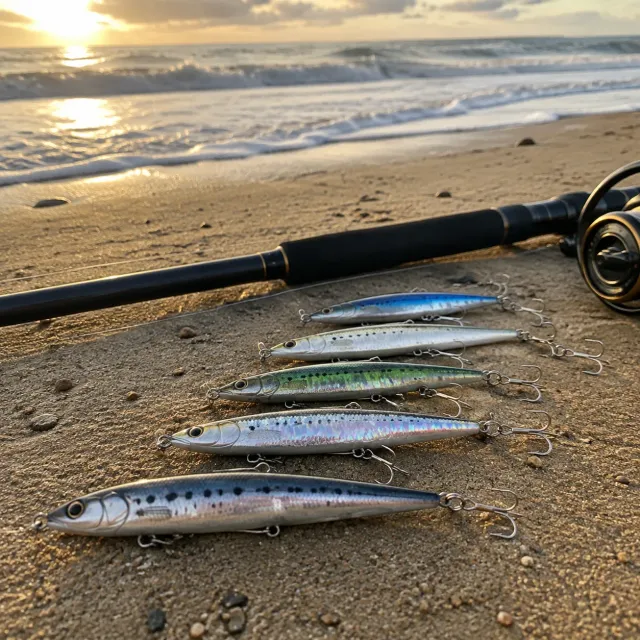
A long-casting lure should do more than fly farther. The best choice reaches the target zone with your rod and line, stays stable in the wind, sinks at a usable rate, and remains easy to track through the retrieve. A lure that casts extremely well but blows out, drops beneath feeding fish, or overloads the rod is not the most practical option.
For shore fishing, boat casting, and open-water work, start with the conditions: wind direction, target distance, current, water depth, and the speed at which fish are feeding. Then choose weight and shape together. A dense, streamlined lure generally carries farther than a broad, high-drag profile of similar weight, while a compact lure can be easier to cast in wind and quicker to reach depth.
Define Casting Distance and Conditions
Casting distance is the usable distance between the angler and the zone where the lure can be worked effectively. It is not simply the farthest possible cast. A cast is useful only if you can start the retrieve at the intended depth, maintain contact with the lure, and present it naturally.
Before selecting a lure, define the actual casting problem.
- Open shoreline: Distance may be needed to reach a bar, point, rip, bait school, or deeper water beyond the break.
- Windy beach or jetty: A lure needs enough mass and a low-drag shape to hold its line through a headwind or crosswind.
- Boat casting: Distance may matter less than quickly reaching fish that surface briefly or feeding along a current edge.
- Current-swept inlet or pass: The lure must cast well and still maintain depth and feel while current pushes it.
- Deep structure or offshore edges: Fast sinking and line control can matter more than maximum horizontal distance.
Wind changes the calculation quickly. A tailwind can make lighter lures feel surprisingly capable, while a direct headwind exposes every bit of air resistance in a lure, leader, and line. In persistent wind, a compact metal lure is often more controllable than a larger plug with more surface area.
Also consider room behind and beside you. On a crowded shoreline, around rocks, or near vegetation, a slightly heavier lure that reaches the zone with a shorter casting motion can be more useful than a lighter lure that requires a full, open swing.
A practical definition of “long cast” is therefore condition-specific: enough distance to reach the fish while preserving a controlled presentation.
Match Lure Weight to Rod and Water
Lure weight is the main casting-distance lever, but it must match the rod’s rated casting range, the line system, and the water you intend to fish. Going heavier can improve distance, yet it can also reduce casting accuracy, make a lure sink too quickly, or place excess stress on equipment.
Use the rod’s marked lure-weight range as the starting point. For consistent casting, many anglers find the middle to upper-middle portion of that range easier to load than the extreme light end. The exact sweet spot varies by rod action, casting style, line, wind, and lure profile.
Match the lure to the rod first
A rod that is underloaded may not bend enough to transfer energy efficiently. A rod that is overloaded can feel uncontrolled and may not cast safely. Confirm:
- The rod’s stated lure-weight range
- Whether the rod is designed for shore casting, inshore use, offshore casting, or another application
- The line rating and the manufacturer’s recommendations
- Whether the lure includes hooks and split rings when comparing total casting weight
The finished lure weight is what the rod casts, not just the bare lure body. Replacement hooks, heavier split rings, and added assist hooks can meaningfully change the setup, particularly on lighter lures.
Match the weight to depth and current
Weight also dictates how quickly the lure enters the strike zone. In shallow water, a very heavy lure may reach the bottom before a deliberate retrieve begins. Over reefs, rocks, or grass, that can lead to frequent snags. In deep water or strong current, too little weight can make it difficult to maintain contact or estimate depth.
Use this basic approach:
| Situation | Practical weight direction | Why it helps |
|---|---|---|
| Shallow, calm water | Lighter within the rod range | Gives more time in the upper water column |
| Windy shoreline | Moderate to heavier, compact profile | Improves casting penetration and line control |
| Strong current | Heavier or faster-sinking design | Helps the lure reach and hold a workable depth |
| Deep water | Heavier, dense design | Reduces time spent sinking and improves contact |
| Surface-feeding fish | Weight that reaches the school without overshooting | Supports quick casts and immediate presentation |
Line affects the result. A thinner-diameter line usually experiences less wind resistance and can help a lure cast farther, but it must still be appropriate for the fishing environment and expected fish. A bulky leader, oversized snap, or excessive knot tag can undermine the benefit of a streamlined lure.
Compare Streamlined and Compact Profiles
Lure shape determines how efficiently the lure moves through air and water. Two lures of the same listed weight may cast and retrieve very differently because their profiles create different drag.
A streamlined profile is usually longer and narrower. It tends to cut through wind well and can produce a stable, distance-oriented cast when the lure tracks straight. A compact profile concentrates mass in a shorter body. It can be particularly effective when casting in wind, when a quick sink is useful, or when you need a small visual target with substantial weight.
Neither is automatically better. Choose the profile that solves the current presentation problem.
Streamlined profiles
Long, narrow lures are often useful when you need a baitfish-like silhouette and a retrieve that covers water efficiently. Their length can help create a visible flashing or darting action, depending on the design and retrieve speed.
Potential limitations include:
- More wind resistance than a similarly weighted compact lure if the body has broad sides or exposed hardware
- Greater tendency to be affected by crosswind during the cast
- A larger visual profile that may not suit every feeding situation
- More leverage for a fish to use during a fight, depending on hook placement and species
For surface or near-surface casting, a purpose-built long-cast sinking pencil lure can be worth comparing by its listed weight, length, swimming behavior, and recommended use. Check the product page rather than assuming every sinking pencil behaves the same way.
Compact profiles
Compact metal designs pack weight into less length. They are often practical for surf, jetties, boat casting, and any setting where wind resistance or a fast sink is a concern. Their small profile can also be useful when forage is small but the conditions demand casting weight.
Compact does not mean subtle in every situation. A dense lure can descend rapidly, and a fast retrieve may make it run high only briefly before it falls again. It can also be easy to retrieve too fast, causing an unstable action or a lure that skips near the surface.
An offshore casting jig in 60 g is an example of the type of product to evaluate for rod compatibility, depth, and the hardware configuration shown on its product page. Confirm that its listed specifications fit the rod and presentation before using it as a general shore-casting choice.
Shape affects retrieve control
A long cast introduces a delay between the lure landing and the moment you establish line tension. Streamlined and compact lures both benefit from a deliberate start:
- Close the bail or engage the reel promptly after splashdown.
- Take up slack until you can feel the lure.
- Let it sink for a counted interval only when depth is part of the plan.
- Begin at a steady retrieve speed before adding rod movement.
This sequence reduces line bow, helps keep the lure from drifting unpredictably, and makes strikes easier to detect.
Review Sinking Speed and Depth Control
Sinking speed is the bridge between casting distance and effective presentation. A long cast is wasted if the lure spends most of the retrieve above or below the fish.
A sinking lure’s actual rate depends on its design, water movement, line resistance, hook and hardware changes, and retrieve speed. Do not assume that two lures of equal weight sink at the same rate. A broad-bodied lure may plane or flutter differently from a narrow metal jig, while a change in hooks can alter balance and fall.
Use a counted sink as a repeatable depth-control tool. After a cast, allow the lure to fall for a consistent number of seconds, then retrieve. Repeat the same count across several casts before changing it. This creates a usable reference even when you do not know the precise depth.
Retrieve choices by depth
- High in the water column: Start the retrieve quickly, keep the rod tip in a position that maintains tension, and avoid long pauses.
- Mid-depth: Let the lure sink briefly, then retrieve at a moderate, steady pace with occasional controlled twitches.
- Near bottom: Use enough time for the lure to approach depth, then employ lift-and-retrieve movements while staying alert for bottom contact.
- Current seams: Cast so the lure can enter the moving water under control. Take up slack quickly, then use enough retrieve speed to maintain feel.
The main limitation of a faster-sinking lure is reduced time in shallow water. The main limitation of a slower-sinking or lighter lure is reduced depth control in wind and current. Carrying more than one profile and weight is often more useful than trying to make one lure cover every depth.
Choose Finish for Light and Water Clarity
Finish is a visibility and contrast decision, not a guarantee of strikes. Select it according to available light, water clarity, sky conditions, and the amount of flash or silhouette you want the lure to produce.
In clear water and bright conditions, natural baitfish tones, restrained metallic finishes, and patterns with controlled flash can be practical starting points. In stained water, low light, or rough surface conditions, contrast often matters more than fine color detail. Dark tops, light bellies, high-contrast patterns, or reflective finishes can make the lure easier for fish to locate, depending on the presentation.
A simple selection framework:
- Bright sun and clear water: Start with a natural or reflective finish that does not appear excessively bright at the intended depth.
- Cloud cover or early/late light: Use contrast, flash, or a stronger silhouette.
- Stained water: Favor visibility and contrast over delicate pattern detail.
- Night or very low light: Prioritize silhouette, vibration, depth control, and a retrieve you can maintain consistently.
Finish is usually a secondary choice after weight, profile, and depth. An ideal color cannot compensate for a lure that cannot reach the zone or is retrieved outside the fish’s level.
Check Hooks and Hardware
Hooks and hardware affect landing reliability, lure balance, safety, and casting performance. Before fishing a long-cast lure, inspect the connection points instead of treating them as an afterthought.
Check these items:
- Hooks are sharp, undamaged, and appropriate for the intended species and lure size.
- Split rings are closed properly and do not show corrosion, deformation, or gaps.
- Assist hooks, treble hooks, and single hooks do not foul the lure body during the cast or retrieve.
- The line tie, snap, and leader connection move freely without binding.
- Any replacement hardware does not cause the lure to roll, sink unevenly, or lose its intended action.
Changing from treble hooks to single hooks, or adding heavier hardware, may improve a particular setup but can alter the lure’s balance. Test the lure close to shore before committing to a long cast. Watch whether it tracks straight, rolls, rises excessively, or fouls.
Also match hardware to the fishing environment. Saltwater exposure, abrasive structure, and hard-fighting fish place more demand on hooks, rings, and knots than sheltered freshwater conditions. Inspecting after contact with rocks, jetties, or another hard surface is a practical habit.
Plan a Practical Casting Assortment
A useful casting assortment is built around conditions, not a collection of nearly identical colors. For most long-cast applications, cover a small range of weights, profiles, sink behaviors, and finishes that lets you adjust without rebuilding the entire system.
A practical starting assortment could include:
- A lighter streamlined lure for calmer water and a slower, higher presentation.
- A mid-weight option that matches the rod’s everyday casting range.
- A compact, wind-capable lure for distance and faster depth access.
- A heavier option for current, deeper water, or difficult wind.
- A small finish selection: natural, reflective, and high-contrast.
Keep the assortment compatible with your rod. Buying lures that span several unrelated weight classes may leave gaps where none load the rod well. For a buyer or tackle retailer, it is also useful to compare whether each lure has clearly listed weight, length, hook arrangement, and intended presentation. Those details make assortment decisions more defensible than color alone.
Browse metal jig options when building the compact, sinking portion of an assortment. Compare the listed product specifications individually, especially where weight, hook arrangement, or body shape changes across models.
Storage matters. Keep hooks separated enough to prevent tangles, dry saltwater-exposed tackle before long-term storage, and label compartments by weight or sink behavior when multiple finishes look similar. Quick identification helps when wind or current changes during a trip.
Use a Pre-Trip Selection Checklist
Use this checklist before choosing the first long-cast lure of the day:
- What distance is actually needed to reach the target zone?
- Is the wind helping, neutral, or directly opposing the cast?
- Does the selected lure fall inside the rod’s recommended casting range?
- Will it sink too quickly or too slowly for the water depth?
- Does the current require more weight, a faster retrieve, or both?
- Is the lure’s profile better suited to calm water, wind, or rapid depth access?
- What finish offers sensible contrast for the light and water clarity?
- Are hooks, split rings, snaps, and knots in good condition?
- Can the lure be retrieved steadily without rolling, fouling, or losing contact?
- Is there a second option ready for a change in wind, depth, or forage size?
Common mistakes include choosing weight solely for maximum distance, using a lure beyond the rod’s range, letting too much slack develop after the cast, and changing colors repeatedly before confirming depth and retrieve speed. Make one variable change at a time. Adjust sink count, retrieve speed, or profile first, then evaluate whether finish needs to change.
A well-planned long-cast setup gives you range without giving up feel. Start with a lure that matches the rod, wind, depth, and current, then refine the retrieve until it stays in the zone. For additional lure and tackle options, review the WKLURE product catalog alongside the specifications shown for each product.