
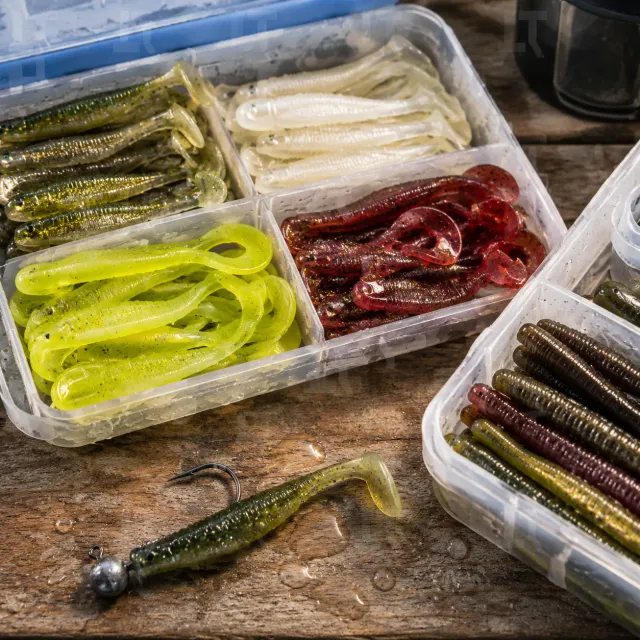
A good soft plastic lure starts with the fish, the depth, and the retrieve you need to make. Paddle tails are dependable search baits when fish respond to vibration and forward movement; slimmer finesse profiles offer a subtler option when fish are pressured, feeding selectively, or holding in calm water.
For buyers and anglers, the practical decision is not simply “large or small” or “bright or natural.” Choose a body profile that matches the intended presentation, then make sure the lure’s size, sink rate, hook point, jighead, and replacement-body plan work together. A good-looking body cannot compensate for an incompatible hook or a weight that runs outside the strike zone.
Start With the Target Fish and Water
Begin a soft plastic lure buying guide with the predator you expect to encounter and the water it occupies. Fish size matters, but so do forage size, water clarity, current, depth, cover, and the way fish are positioned.
A smaller profile is often useful when predators are feeding on young baitfish, small crustaceans, or insects, or when bites are tentative. Larger bodies can be useful when anglers need a more visible silhouette, want to move more water, or are targeting fish that routinely take larger prey. Neither approach is automatically better: an oversized lure may reduce bites in some situations, while a very small lure may be hard for fish to locate in stained water or strong current.
Consider these water scenarios before selecting a lure:
- Shallow freshwater cover: A compact, weed-resistant rig can pass through grass, laydowns, docks, and vegetation more cleanly than an exposed hook presentation.
- Open-water bass, walleye, or striped bass: A paddle tail on an appropriately weighted jighead can cover water and maintain a controlled swimming action through a selected depth range.
- Rivers and current: Current changes effective sink rate and lure action. A lure that tracks correctly in a pond may roll, rise, or sweep too quickly in moving water.
- Inshore flats, channels, and marsh edges: Match body size and weight to tidal flow, water depth, and likely forage. Hook corrosion resistance and overall rigging suitability deserve more attention in saltwater use.
- Deeper structure: The rig must reach the target depth without becoming so heavy that it falls past fish too quickly or loses the desired action.
Water clarity should shape your choice, but it should not dictate it alone. In clear water, a natural body shape and restrained color can make sense when fish have time to inspect the lure. In stained water, low light, or choppy conditions, a stronger silhouette, vibration, contrast, or reflective detail can help the lure stand out.
For a tackle assortment, avoid treating “predatory fish” as one category. A useful range usually covers at least one compact finesse option, a versatile baitfish-shaped swimmer, and a larger profile for bigger forage, faster water, or more aggressive presentations.
Compare Paddle Tail and Finesse Profiles
The tail and body profile determine how a soft lure moves, how much resistance it creates, and how well it suits a particular retrieve. The most common mistake is choosing a tail style by appearance alone instead of considering the presentation it is meant to deliver.
| Profile | What It Does Best | Typical Strengths | Main Limitations |
|---|---|---|---|
| Paddle tail | Creates a consistent swimming kick on a steady retrieve | Covers water, produces vibration, works well on jigheads and many weighted rigs | Can be too active for neutral fish; action may change with incorrect weight or hook placement |
| Curl tail | Produces flowing tail movement, especially as it falls or moves slowly | Useful for slower presentations, varied retrieves, and profiles with extra visual motion | Long tails can foul, tear, or become less controlled in heavy cover |
| Straight-tail worm | Delivers a restrained, subtle presentation | Effective for slow fishing, bottom contact, and pressured conditions | Less water displacement and visibility than an active swimming tail |
| Creature or appendage profile | Adds bulk, flutter, and a more irregular fall | Useful around cover and for crawfish- or forage-inspired presentations | Appendages can snag, tear, or create too much drag for some applications |
| Slim baitfish profile | Offers a natural, streamlined silhouette | Tracks efficiently in current and can suit open-water predators | May produce limited built-in action without the right retrieve or rig |
Paddle Tails for Coverage and Vibration
Paddle tail lures are often the starting point for anglers who want an active swimming bait. The paddle catches water as the lure moves, causing the tail to kick and the body to roll or pulse. This makes the profile useful for covering flats, points, shorelines, channel edges, and suspended fish.
The action depends on more than the tail shape. Body thickness, tail connection, plastic softness, hook placement, jighead weight, retrieve speed, and current all affect the swim. A paddle tail that looks balanced in the package can track poorly when rigged off-center or paired with a hook that is too large.
Use a paddle tail when the objective is to:
- Search a broad area efficiently.
- Maintain movement on a steady retrieve.
- Give predators vibration to locate in broken light or reduced visibility.
- Present a baitfish-like body at a controlled depth.
For product comparisons, inspect whether the body has a straight rigging channel, a defined hook-entry area, and enough thickness to hold the selected hook securely. These details influence both ease of rigging and how long the lure stays aligned.
Finesse Profiles for Subtle Presentations
“Finesse” is a broad term rather than a single lure shape. It usually means a slimmer body, reduced tail resistance, more restrained movement, or a presentation intended to be worked slowly. Straight-tail worms, slim minnows, small stick-style bodies, and low-action baitfish shapes can all fit this role.
These profiles are useful when fish are following without committing, when fishing pressure is high, or when a slower, more controlled presentation is necessary. They can also work well on light jigheads, drop-shot-style setups, weedless hooks, or other rigs appropriate to the local fishery.
The tradeoff is that subtle lures often ask more of the angler. They may require better line control, deliberate pauses, and a closer match between hook size and body thickness. In dirty water or fast current, a very slim, low-action body may need additional contrast, weight, or a different presentation to remain noticeable.
Curl Tails and Other High-Motion Shapes
Curl tails create movement with relatively little forward speed and can remain active during a fall or a slow retrieve. That makes them practical when anglers want a lure to look alive without retrieving it quickly. However, the longer tail is also more exposed to short strikes and can collect vegetation.
For buyers assembling an assortment, curl tails complement paddle tails rather than replace them. A paddle tail is usually the more direct choice for a baitfish-style swimming presentation. A curl tail adds a different motion pattern and can give anglers another option when a standard swimmer is ignored.
Choose Size, Weight and Sink Rate
Choose lure length in relation to forage and target fish, then choose rig weight based on depth, current, and retrieve speed. Body length alone does not establish sink rate because the rigging components, plastic formulation, line, and water movement all contribute.
A useful approach is to select the body first, then build the rig around the depth where fish are feeding. For example, a shallow shoreline presentation may need only enough weight to keep the lure running beneath the surface. Fishing a deeper break, bridge piling, channel, or current seam may require more weight to maintain contact with the intended zone.
Think in Terms of Time in the Strike Zone
The right weight is the one that keeps the lure at the desired depth long enough to be noticed and eaten. Too little weight can leave a lure riding above fish or drifting out of position. Too much weight can make the lure fall too rapidly, reduce a tail’s natural action, or increase hang-ups on bottom cover.
Before committing to a rig, confirm:
- Target depth: Where are fish likely positioned, and how long must the lure stay there?
- Current or wind: Both can increase the weight needed for control.
- Body resistance: Wider or more active bodies create more drag than slim bodies.
- Retrieve speed: A fast retrieve can lift a lure; a slow retrieve can let it sink or contact cover.
- Line diameter: Heavier line can add drag, particularly in current.
- Hook and jighead fit: A larger hook or head changes total rig weight and balance.
For a retailer or distributor, assortments should show a clear relationship between body size and compatible rigging. An attractive range becomes less useful when the appropriate hooks or jigheads are unavailable or difficult to identify.
Avoid Weight-Driven Action Problems
Heavy jigheads can stabilize a lure in current and get it down quickly, but they can also make a soft body appear rigid or cause it to tumble. Light heads preserve a slower fall and can be useful in shallow water, but may not keep a lure tracking correctly in wind or current.
Test or inspect the rigging concept before buying a deep assortment. The hook shank should support the body without crushing it, and the jighead should not make the lure lean, roll excessively, or slide down the hook after a few casts. If actual weight and sink-rate specifications are not listed, confirm them with the applicable product information rather than assuming they match a similar-looking lure.
Review Colors and Reflective Details
Color should create visibility and confidence under the conditions, not become an unnecessary complication. A small, purposeful color selection usually serves anglers better than a large group of nearly identical shades.
Start with three practical color families:
- Natural baitfish tones: Translucent, silver, pearl, gray, olive, and muted combinations are useful where forage imitation and clear-water subtlety matter.
- Light or high-contrast tones: White, chartreuse-accented, and other visible options can help in stained water, low light, surf, or situations where fish need to locate the lure quickly.
- Dark silhouette tones: Black, dark blue, dark green, and similar options can provide a strong outline against brighter water or sky conditions.
Reflective flakes, foil-like details, and contrasting tails can add flash or make the lure easier to see. They are not a substitute for sound rigging and appropriate depth. In bright, clear conditions, too much flash can sometimes work against a subtle presentation. In darker or turbid water, a reflective or contrasting detail may help define the lure.
When comparing colors for commercial purchase, check whether each pattern is distinct in function. Five nearly identical green-pumpkin variations may not offer as much practical coverage as one natural color, one light contrast color, one dark silhouette, and one flash-forward baitfish pattern.
Also confirm how color is presented in product photography. Screen images are useful for comparing patterns, but lighting and displays can alter shade, transparency, and reflective details. Treat the product page’s stated color designation as the reference when it is provided.
Match Hooks and Jigheads
A soft plastic lure works only as well as its rigging. Hook choice affects hook-up potential, snag resistance, body action, balance, and durability. The goal is a hook that fits the body profile without restricting movement or leaving excessive exposed metal.
For open water, an exposed-hook jighead is often a straightforward option. It can provide direct hook exposure, predictable weighting, and a clean swimming presentation. For vegetation, wood, and other snag-prone cover, a weedless hook or a buried hook point may be more appropriate. The compromise is that weedless rigging can require a firmer hookset and precise body alignment.
Hook Fit Checklist
Before pairing a body with a hook, check the following:
- The hook gap is wide enough to clear the compressed body on a strike.
- The hook shank reaches far enough into the body to support it without extending too far back.
- The hook point exits at the correct place so the lure remains straight.
- The hook does not choke the tail action or split the body at the head.
- The jighead collar or keeper holds the plastic without immediately tearing it.
- The selected hook material and finish suit the intended freshwater or saltwater environment.
A hook that is too small may not leave enough gap for reliable penetration. A hook that is too large can overwhelm the body, reduce its motion, or make the lure look unnatural. For thick-bodied paddle tails, wide-gap options may be necessary. For narrow finesse bodies, a lighter wire or more compact hook can preserve a natural presentation.
When selecting jigheads, look beyond the listed head weight. Head shape affects how the lure tracks, contacts bottom, and moves through cover. A rounded head, a more streamlined head, and a stand-up-oriented shape can each produce different results with the same soft body.
Check Durability and Replacement Bodies
Soft plastics are consumable tackle. Tail tears, head splits, lost lures, and fish damage are expected over time. The buying question is not whether a lure body will ever need replacement, but whether replacing it will be practical and consistent.
A body can fail in several ways:
- The head tears around the jighead keeper.
- The hook exit point splits after repeated rigging.
- The tail is bitten off or damaged.
- The body slides down the hook and no longer tracks correctly.
- The material deforms after storage or contact with incompatible plastics.
For anglers, carrying replacement bodies can keep a successful presentation in rotation without replacing the entire rig. For stores and sourcing teams, replacement availability can be an important assortment consideration because it supports repeat use of compatible hooks and jigheads.
Do not assume all soft-plastic materials store together safely. Some materials can react, bleed color, soften, or deform when stored against other plastics. Keep products in their original packaging when possible, follow any product-specific storage directions, and avoid leaving soft baits exposed to high heat in vehicles or direct sun.
Durability always involves a tradeoff. A very supple body may show more action but can tear more readily; a firmer body may last longer but move differently. Compare material behavior only where product information supports it, and use field handling to evaluate whether the balance suits the intended application.
Compare Soft Lure Product Options
A practical soft-lure range should give anglers clear choices across profile, size, and rigging needs. Start by comparing the shapes and details available in the soft plastic lures category, then narrow the shortlist based on the fishery and presentation rather than on color alone.
For a more substantial baitfish-style option, review the listed details of the large weighted paddle tail lure. Use the product page to verify the actual specifications, included components, and stated intended setup before deciding whether it fits the depth, target fish, and tackle assortment you have in mind.
When comparing product options, use a consistent buying worksheet:
| Buying Factor | What to Compare | Why It Matters |
|---|---|---|
| Body profile | Paddle tail, curl tail, worm, baitfish, or appendage design | Determines movement and presentation style |
| Body size | Overall length and body thickness | Helps match forage, fish size, and hook fit |
| Intended water | Freshwater, inshore, saltwater, shallow cover, or open water | Guides hook, head, and hardware requirements |
| Rigging path | Jighead, weedless hook, weighted hook, or other compatible setup | Prevents mismatched components |
| Weight information | Body weight, included head weight, or recommended rig range when stated | Supports depth and sink-rate planning |
| Color role | Natural, high contrast, dark silhouette, or reflective pattern | Keeps color options functional rather than redundant |
| Replacement planning | Available body options and packaging details when shown | Helps manage damage and repeat use |
Avoid selecting an assortment based solely on broad labels such as “bass lure” or “saltwater lure.” A product may be capable of catching multiple species, yet still be a poor fit for a particular depth, hook type, or local forage pattern. The useful comparison is operational: what does this lure do, how is it rigged, and where can it be fished effectively?
For a broader view of available tackle types beyond soft baits, browse the WKLURE product catalog. Product pages should remain the source for model-specific specifications.
Confirm the Final Lure Specification
Before purchasing or stocking a soft plastic lure, turn the decision into a complete specification. This reduces incompatible combinations and makes it easier to compare alternatives fairly.
Use this final checklist:
- Identify the target predator, likely forage, and the water depth where fish will be presented with the lure.
- Choose an action level: active paddle tail, flowing curl tail, subtle finesse body, or another profile that suits the retrieve.
- Select a body size that matches the use case instead of relying on the target species name alone.
- Choose a color role for the water clarity and light conditions: natural, contrast, dark silhouette, or reflective.
- Match the hook gap, shank length, and point placement to the body’s thickness and rigging channel.
- Select jighead or added weight for the desired sink rate, current, and time in the strike zone.
- Confirm whether the presentation needs exposed-hook efficiency or weedless capability.
- Check product-specific dimensions, weights, materials, included items, and storage guidance where those details are published.
- Plan for replacement bodies, spare hooks, and storage that protects the soft plastic from heat and material incompatibility.
The best choice is the lure and rig combination that reaches the right water, moves in the intended way, and stays properly aligned through normal fishing. Compare the available soft-plastic options against that checklist, then select the smallest practical assortment that covers the presentations your fishing or buying program actually requires.